
How to Check Criminal History in Dallas County
Begin with the question the record must answer. A filed charge or sentence belongs in Iowa Courts Online. A recent Dallas County arrest may appear in the sheriff's Daily News Report or jail roster. The arresting agency holds the incident narrative. The Iowa Department of Public Safety, Division of Criminal Investigation, or DCI, supplies the statewide criminal-history product. Federal matters use the Southern District of Iowa and PACER instead of the county docket.
Gather the full name, exact date of birth when authorized and available, likely arrest date, city, and case or incident number. Spellings matter. So does the county filter. West Des Moines and Urbandale cross county lines, and the same name may appear elsewhere in Iowa. A Dallas County criminal record search should end with the disposition, not the first charge shown.
| Iowa Courts Online field | Use | Dallas County search note |
|---|---|---|
| Case Search / Name Search | Choose one search mode | Use the case-number route when the full identifier is known. |
| Trial Court Case Number | Exact case lookup | Keep the alphabetic case-type code. |
| County | Geographic filter | Select Dallas to reduce namesake matches. |
| Last / First / Middle Name | Party-name lookup | Use the available name parts to narrow common names. |
| Case Type | Optional category filter | Narrow to a criminal category when the interface offers it. |
- Search Iowa Courts Online and select Dallas County for filed criminal cases.
- Check the Dallas County jail roster and Daily News Report for recent custody or sheriff incidents.
- Use Booking Origin or the report header to identify the sheriff, city police, or state agency that made the arrest.
- Request the source report from that agency and compare it with the court case outcome.
- Order a DCI record check when a releasable statewide Iowa history is needed.
- Use Iowa DOC, VINE, PACER, or the federal inmate locator only when the person's custody or case moved to that system.
The Dallas County government directory helps route a county request. Its official landing page is shown below. Department links there separate sheriff, court, attorney, and general county functions.
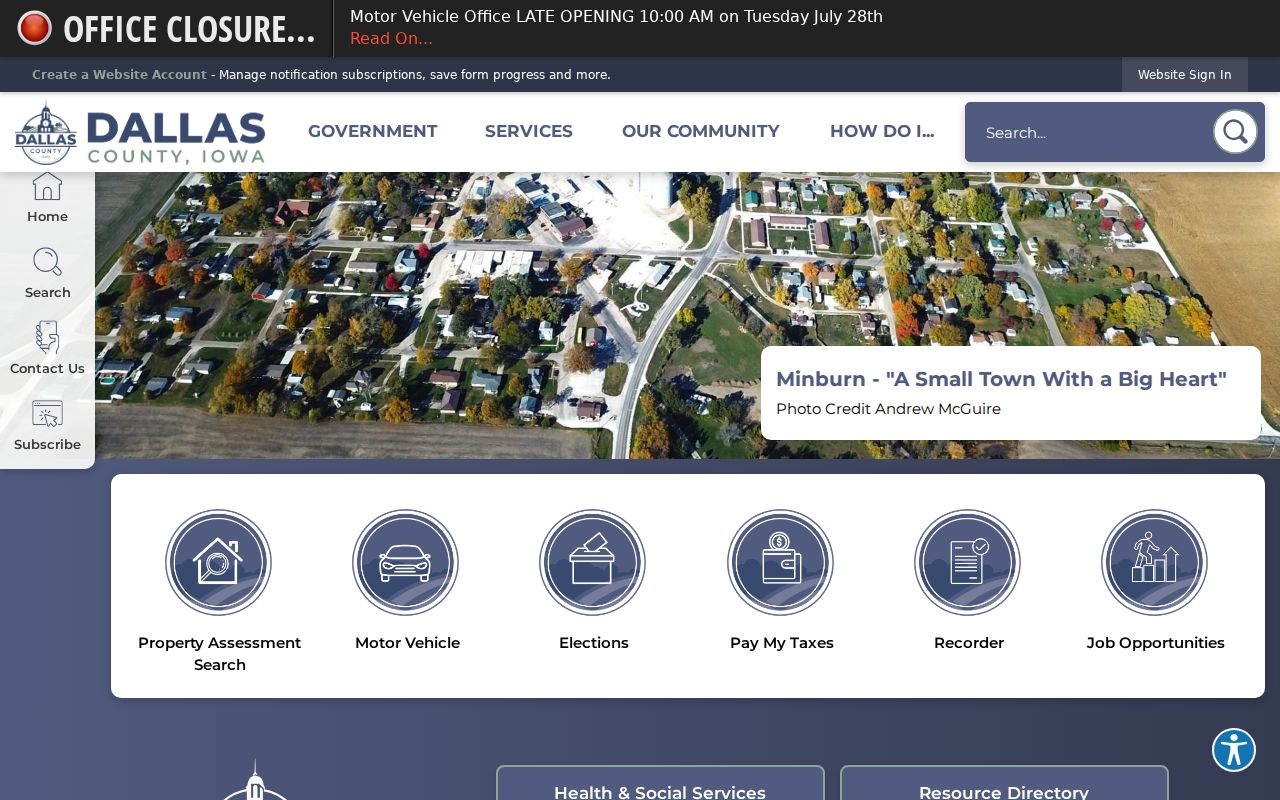
The directory is a starting point, while each custodian remains responsible for the record it created.
Four Dallas County Record Custodians
Dallas County criminal history is split across four core records. The arresting agency writes an incident or arrest report. The Dallas County Correctional Facility creates a booking record when a person is lodged. The Clerk of District Court keeps the criminal case after charges are filed. DCI assembles fingerprint-supported arrest cycles and reported dispositions for its statewide product. These files overlap, but none is a substitute for the rest.
Arresting Agency
Holds the incident or arrest report with alleged facts, place, officers, and original event.
Dallas County Jail
Holds intake, bond, custody, booking-origin, and charge-row information.
Dallas County Clerk
Holds filed charges, hearings, pleas, orders, dispositions, and sentences.
Iowa DCI
Holds the releasable statewide, fingerprint-supported criminal-history product.
Use the address of the record, not just the person's address. Court copies come from 801 Court Street in Adel. Sheriff reports and jail records route to 28985 Thin Blue Line Lane. The county administration building at 800 Court Street handles non-law-enforcement county requests.
Official Iowa Background Checks
The Iowa DCI Criminal History Record Check is the official state name-check product. Any person may request a basic check using the first name, last name, and exact date of birth. The fee is $15 per last name. A signed release affects what DCI may disclose, including a discharged deferred judgment. Middle name, gender, and Social Security number are optional identity aids.
DCI accepts online, mail, fax, email, and in-person submissions, but not telephone requests. Both the request and billing forms must be complete. The published processing time is generally one to three days, subject to volume and staffing. A result covers releasable Iowa repository data. It is not a national search, and it does not promise that every local event was fingerprinted or reported.
| DCI request field | Required | Format or effect |
|---|---|---|
| Last Name | Yes | The $15 charge applies per last name. |
| First Name | Yes | Minimum name identifier. |
| Date of Birth | Yes | The exact date is required. |
| Middle Name / Gender / SSN | No | Optional details can help resolve a common name. |
| Release Authorization | Conditional | A signed release can affect what DCI discloses. |
| Delivery and Payment | Yes | Complete both request and billing forms and state the return route. |
The official DCI request page displays the current method and forms pictured here. Its instructions control if a fee, payment method, or delivery rule changes.
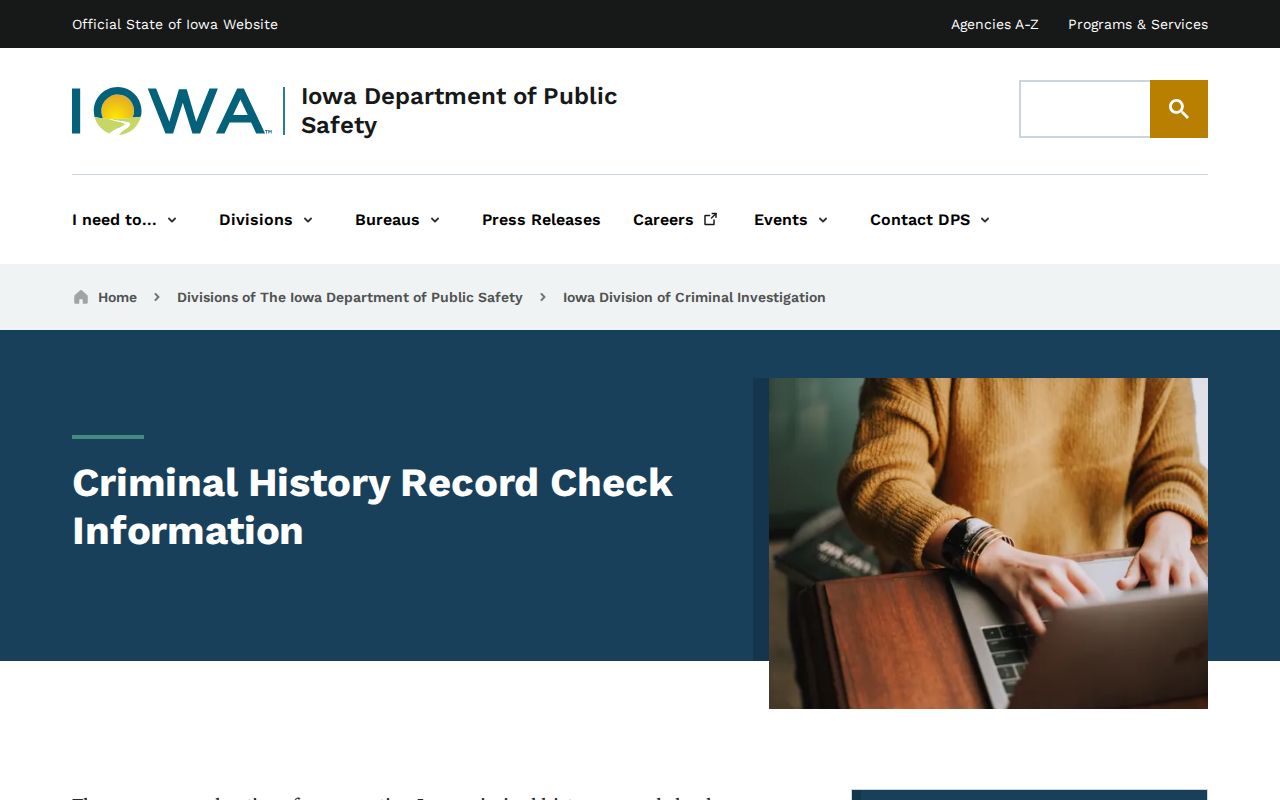
The DCI page should be checked again just before submitting a Dallas County background-check request.
Dallas County Search Costs Compared
A free court search and a paid history check answer different questions. Iowa Courts Online finds public filed cases by name or case number. The DCI fee buys a repository response based on fingerprint-supported source records and Iowa disclosure law. The FBI product is for the subject's own nationwide review. A Dallas County agency may also charge the actual reasonable cost of finding and copying a requested source document.
Iowa DCI: $15 per last name for releasable Iowa repository information. The request uses an exact name and date of birth against a fingerprint-supported source system.
FBI self-review: $18 when submitted directly for the subject's own FBI-maintained Identity History Summary. It requires a signed request, payment, and current fingerprints.
Local sources: the basic Dallas County court search is free. A Dallas County source-document request may cost the actual reasonable amount needed to locate and copy the requested record.
Types of Criminal Records
The label “criminal record” can refer to several files. Dallas County arrest records describe an allegation and custody event. Court records show what prosecutors filed and what the Iowa District Court decided. Corrections records show confinement or supervision. Registry records follow a separate Iowa statute and disclosure system. Knowing the type prevents a request from landing at the wrong desk.
- Incident and arrest reports: source-agency accounts of a call, investigation, or arrest.
- Booking records: jail intake, bond, custody, booking origin, and charge information.
- Criminal case files: complaints, trial information, motions, hearings, orders, pleas, judgments, and sentences.
- Warrant records: court-issued process that may be limited while active or sealed.
- Corrections records: prison, probation, parole, work-release, and related status fields.
- Registry records: public information released through the Iowa Sex Offender Registry.
The Iowa Department of Corrections explains the statewide custody and supervision system shown below. Dallas County jail custody remains a separate county record.
Use Iowa DOC after a sentence moves a person into state prison or community supervision.
Dallas County Booking Records
The sheriff's New World Inmate Inquiry includes current and historical bookings. Set the In Custody control when the question is present confinement. Search fields include name, subject number, booking number, booking date range, and housing facility. Results can show a photograph, name, custody flag, race, gender, height, weight, and whether multiple bookings exist.
An opened profile may show booking and release times, prisoner type, housing, total bond, bail, booking origin, court dates, a docket number, crime class, arresting agency, and disposition fields. The sheriff warns that arrest does not establish guilt and directs readers to the arresting agency or Iowa Courts Online for verification. The roster can be stale, incomplete, or unclear, so the jail line at 515-993-5815 and Iowa VINE are useful fallbacks.
The Iowa Offender Search interface pictured here covers state prison and community-corrections records. It should not be used as a replacement for the Dallas County jail roster.
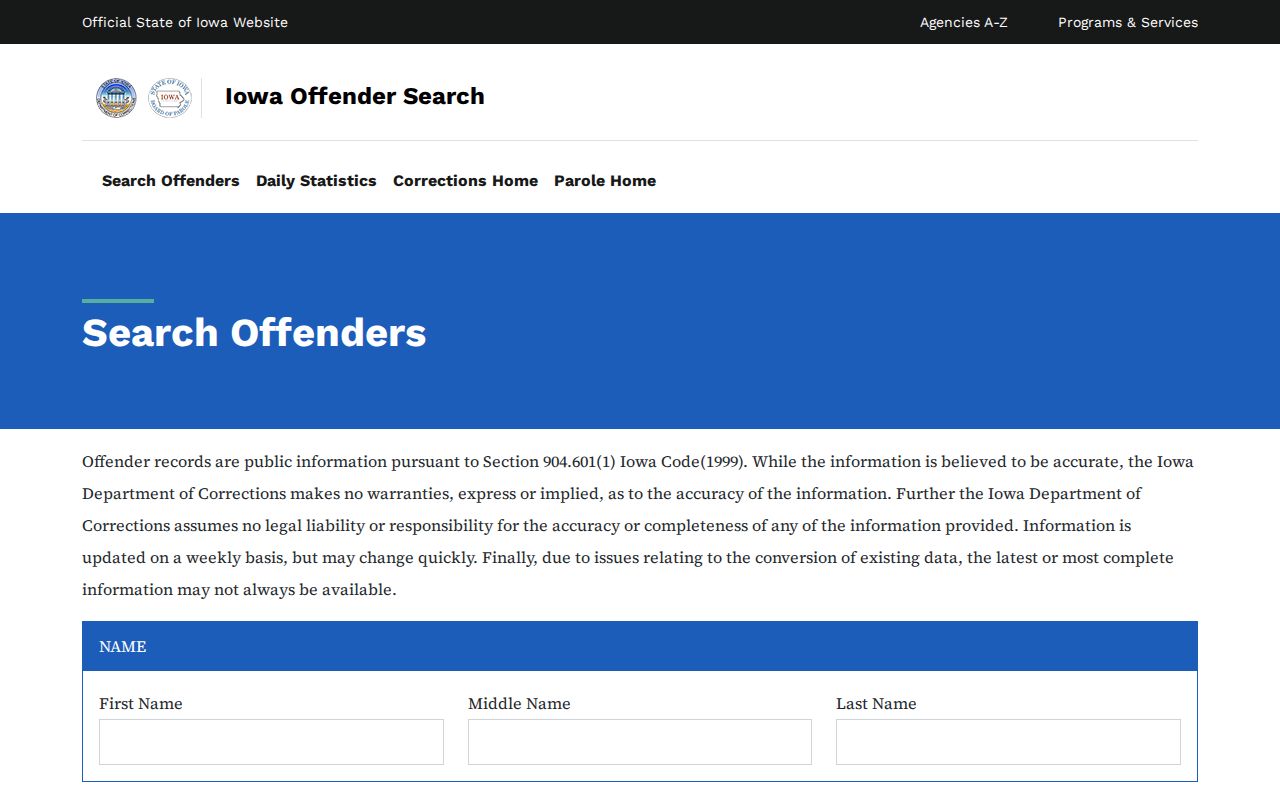
The correct locator depends on whether custody is county, state, or federal.
What a Dallas County Criminal Record Shows
A Dallas County criminal record should be read in context. A booking charge may differ from the prosecutor's formal charge. A count can then be amended, dismissed, tried, or resolved by plea. Match the date, arresting agency, and full court case number before treating two entries as the same event.
| Name and identifiers | Display name and available identity fields, which vary by system and are not always fingerprint verified. |
|---|---|
| Arrest and booking | Agency, event date, booking number, intake and release times, custody flag, and booking origin. |
| Charges and statutes | Initial or filed offense text, Iowa Code citation, count, and offense class. |
| Disposition | Outcome for each filed count, such as conviction, dismissal, acquittal, or deferred judgment. |
| Sentence | Custody or supervision terms, fines, costs, surcharges, restitution, and related orders. |
| Custody or supervision | County jail status, Iowa DOC location, probation, parole, work release, and published end dates where available. |
- Disposition
- The result of a case or individual charge.
- Deferred judgment
- An Iowa outcome in which judgment is withheld while conditions are completed.
- Docket
- The dated list of filings, hearings, orders, and other court events.
- Recognizance
- Release based on a promise to appear without cash security.
A Dallas County case file gives the best public account of how filed charges ended. Compare a booking profile or DCI result with that count-by-count disposition.
Dallas County Fingerprints to Disposition
An Iowa repository record begins with fingerprints. The arresting agency creates its report, and the Dallas County jail makes an intake record if the person is lodged there. Submitted prints identify the arrest cycle in DCI. The Dallas County Attorney may then file charges, while the Clerk of District Court records hearings, orders, disposition, and sentence. Courts and justice agencies report results back to DCI.
Record flow: Arresting agency › Dallas County booking › fingerprint submission › Iowa District Court disposition › DCI history.
A missing fingerprint or delayed disposition can leave a gap. That is why “no Iowa criminal history found” is not proof that no event occurred. It may also mean the data is not releasable without authorization or is confidential juvenile material. A person reviewing their own incorrect result can send DCI a certified Dallas County order and the case identifiers.
The DCI support operations page describes the repository and Records and Identification Unit pictured below. It ties fingerprints to the statewide data function.
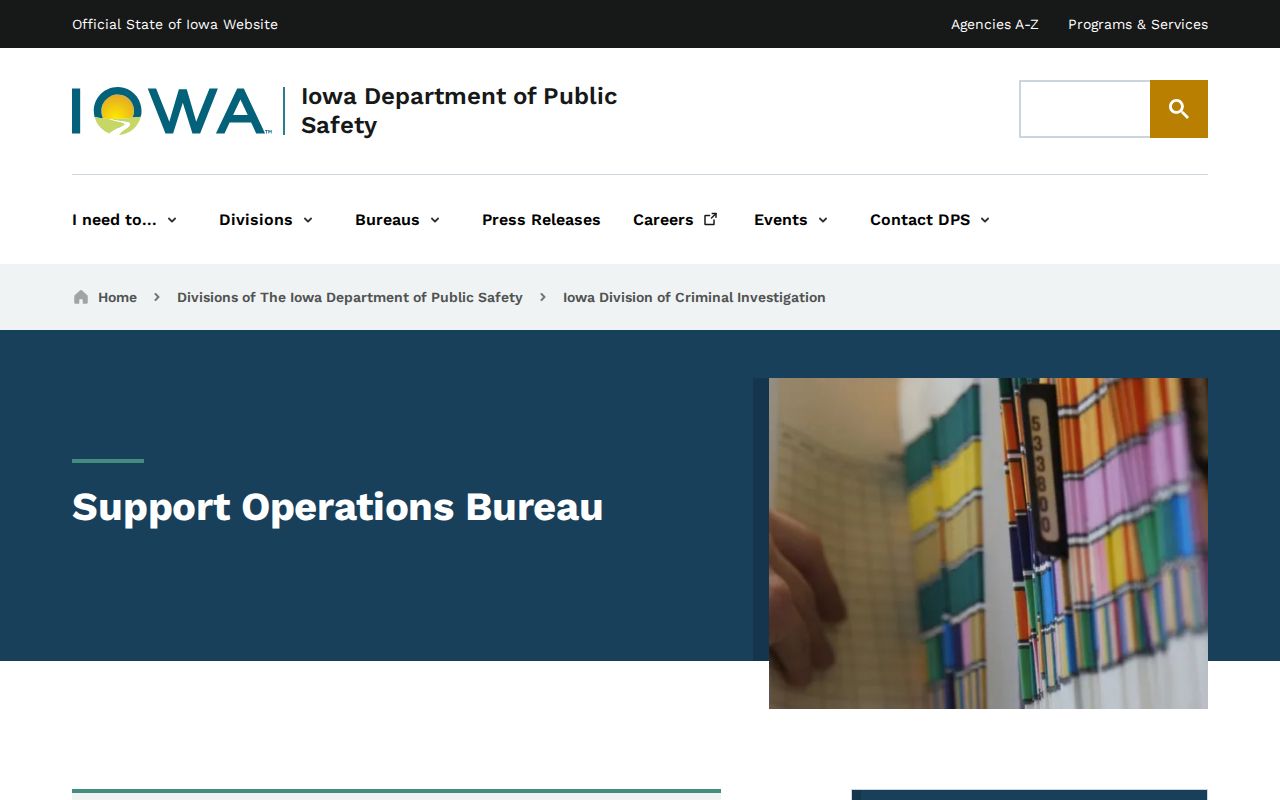
The state image reinforces why a county docket search and a DCI history are complementary records.
Public Access Laws
The Iowa Open Records Law, Iowa Code chapter 22, starts with a right to inspect and copy public records unless another law makes the material confidential. Chapter 692 controls criminal-history dissemination. Dallas County may redact juvenile, victim-sensitive, active-investigation, or other protected information. Public court access and DCI disclosure also have their own rules.
Key Iowa statutes:
Iowa Code §22.2 gives each person a right to examine and copy public records unless an exception applies.
Iowa Code §22.3 covers request channels, copying cost, and reasonable expenses.
Iowa Code §22.7 identifies categories of confidential records.
Iowa Code §692.2 governs access to and release of criminal-history data.
Iowa Code §232.147 makes juvenile court records confidential subject to defined access.
The law supports access, but it does not turn an allegation into a conviction. Read the final court result and verify the record with its source office.
Dallas County Warrant Checks
No standalone Dallas County active-warrant name search was verified. A jail profile may show “Warrant” as prisoner type, related charge text, a court docket, and bond. That only describes a person already booked. Iowa Courts Online may show public docket events, but sealed search warrants and process withheld for safety or investigative reasons may not appear.
For a personal warrant concern, use the official fallback chain. Call jail charge and bond information at 515-993-5815. Contact sheriff administration at 515-993-4771 or dispatch at 515-993-4567. Submit a Dallas County law-enforcement records request. Check the court docket and call the Clerk at 515-993-5816. A city-issued matter belongs with that city's police or court channel, and a supervision issue may route to the Fifth Judicial District Dallas office at 515-993-4632.
Confirm the issuing court, case number, bond type, amount, and appearance instructions. The sheriff's nonemergency text tip is not a personal verification service. A stale third-party list is not a safe basis for action.
Sealed, Expunged & Restricted
Iowa Code chapter 901C is the main general expungement law. Section 901C.2 addresses qualifying not-guilty verdicts and dismissed charges under its conditions. Section 901C.3 permits a one-time remedy for certain misdemeanor convictions after more than eight years when its financial, pending-charge, and history requirements are met. Many offense categories are excluded, so each count must be checked against the current law.
Start with the exact Dallas County case and disposition in Iowa Courts Online. Use the Iowa Judicial Branch form library, then file the proper form with the Dallas County Clerk of District Court. The clerk can confirm current filing treatment. If relief is granted, allow the court and DCI time to process notice before ordering a personal DCI result to verify the change.
An order under §901C.3 makes the record confidential and directs DCI removal when the conviction is held there. It does not mean every authorized government record vanishes. Juvenile records use chapter 232, and successful deferred judgments follow separate provisions.
Dallas County Chapter 22 Requests
The Dallas County Open Records Request page separates law-enforcement reports from other county records. The online form is encouraged, not mandatory. Requests may also be made in person, in writing, or by telephone. Give the event date and place, involved agency, report or case number, record type, date range, and desired format when known.
Dallas County aims to respond within ten business days. Iowa law permits up to twenty calendar days when the county is deciding whether a record is confidential. Work beyond thirty minutes may result in a reasonable retrieval charge, and copying charges may not exceed the cost of providing the service. The custodian should communicate needed expense.
The county policy is the official source for the current request route. A municipal police report still belongs with that city, even when Dallas County dispatch handled the call. The Census QuickFacts profile for Dallas County shown below adds useful context: fast population growth increases the need to describe records precisely.
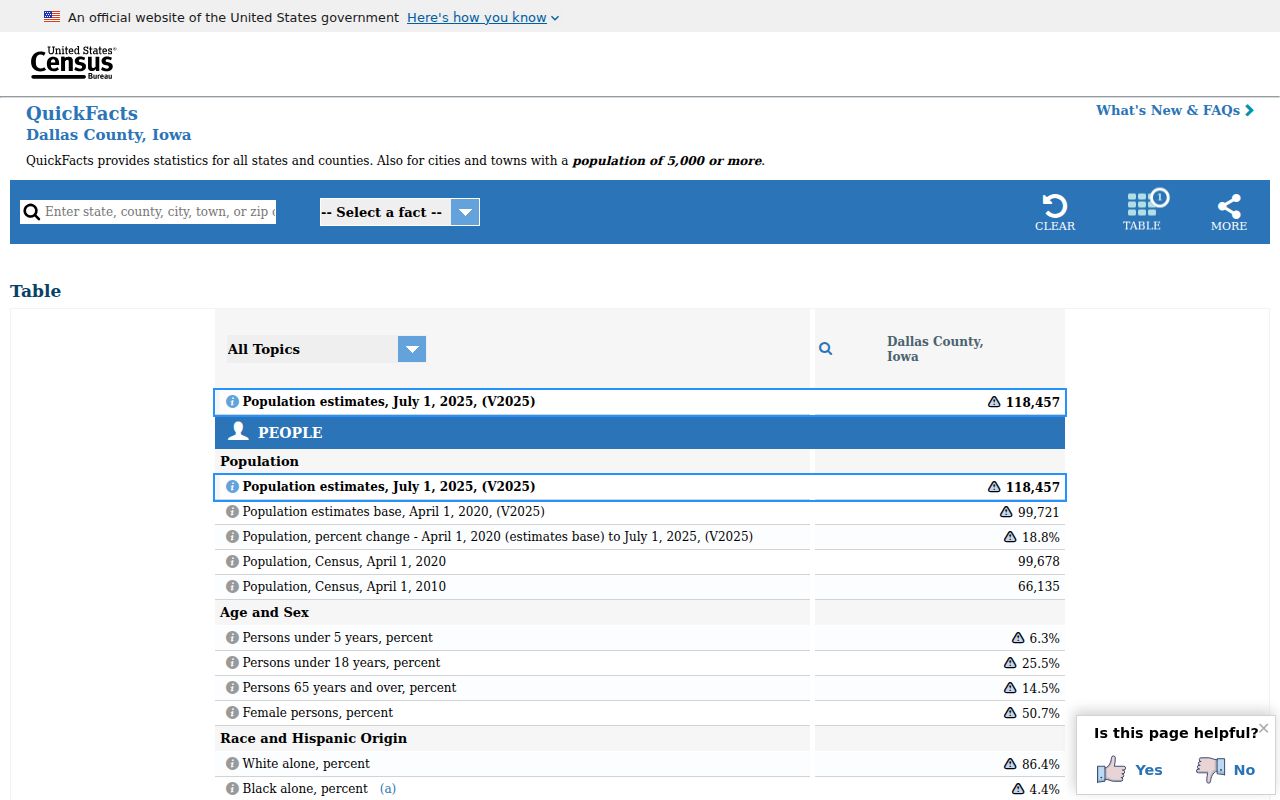
The population profile does not contain criminal records, but it helps explain why targeted Dallas County requests reduce delay and broad search costs.
Criminal Records by City in Dallas County
City police departments keep their own incident and arrest reports, while filed criminal and ordinance cases move into Iowa's unified District Court. West Des Moines and Urbandale span Dallas and Polk Counties, so the incident location controls the jail and clerk route. Waukee arrests use Dallas County Jail, and its public-record form supplies a direct police channel.
West Des Moines Criminal History
2025 partial-special-census estimate: 73,959. Follow the incident address to the correct county.
Urbandale Criminal History
2020 population: 45,580. Police publish monthly arrest-report PDFs and sell public case reports.
Waukee Criminal History
2025 estimate: 34,890. Police requests route through the city, while bookings and cases route to Dallas County.
Dallas County Custody Record Layers
The Dallas County jail roster answers a county-custody question. Iowa Offender Search covers prison, community programs, probation, parole, and work release. VINE provides custody and status notifications. The Iowa Board of Parole publishes its own decisions and policies. A federal prisoner uses the Bureau of Prisons locator, while a federal case stays in PACER.
The Iowa Board of Parole source pictured below covers the state parole authority. Fifth Judicial District correctional services administer community supervision for Dallas County.
Board decisions, DOC status, and a Dallas County court sentence should be matched by offender and case identifiers.
The PACER portal provides the official federal case channel shown here. Dallas County lies in the Southern District of Iowa.
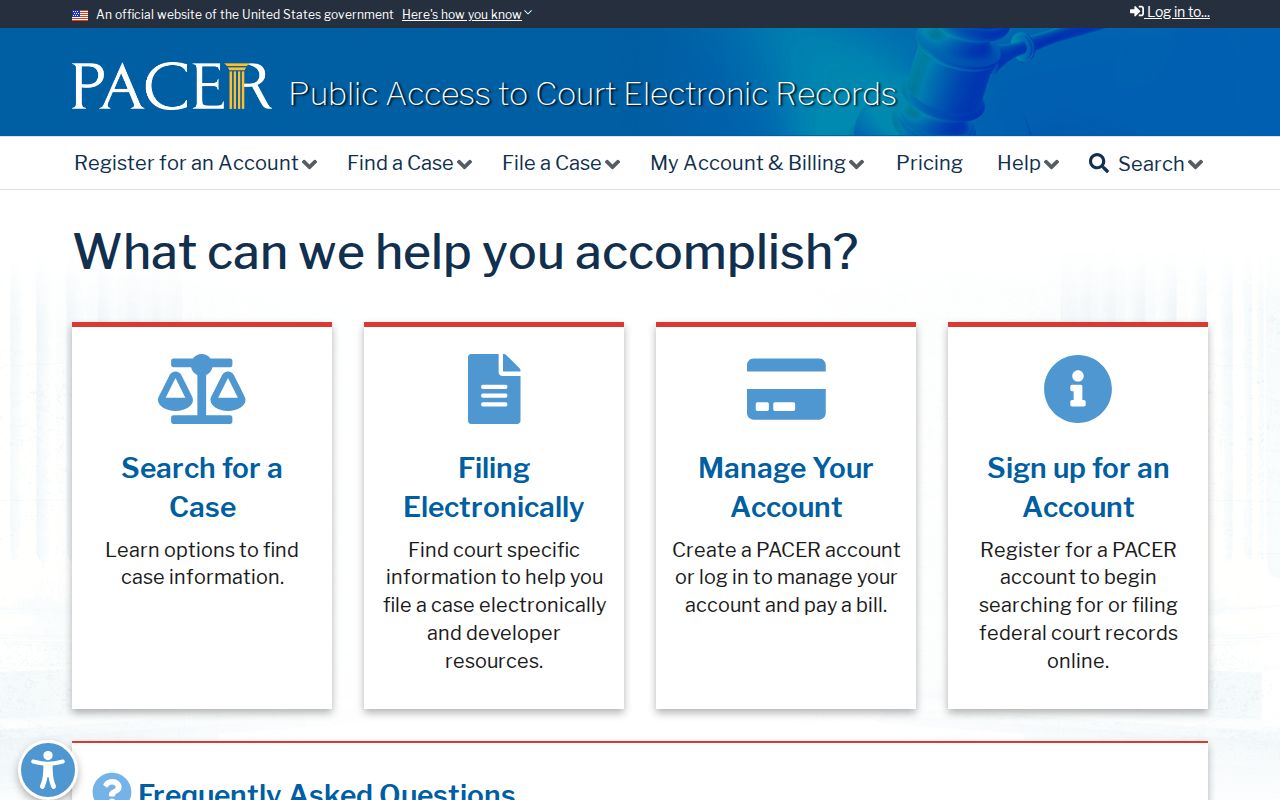
A federal docket does not become a Dallas County District Court case, even if local officers took part in the arrest.
The Southern District of Iowa court page pictured below is the district source for federal proceedings in Dallas County. The nearest federal courthouse is in Des Moines.
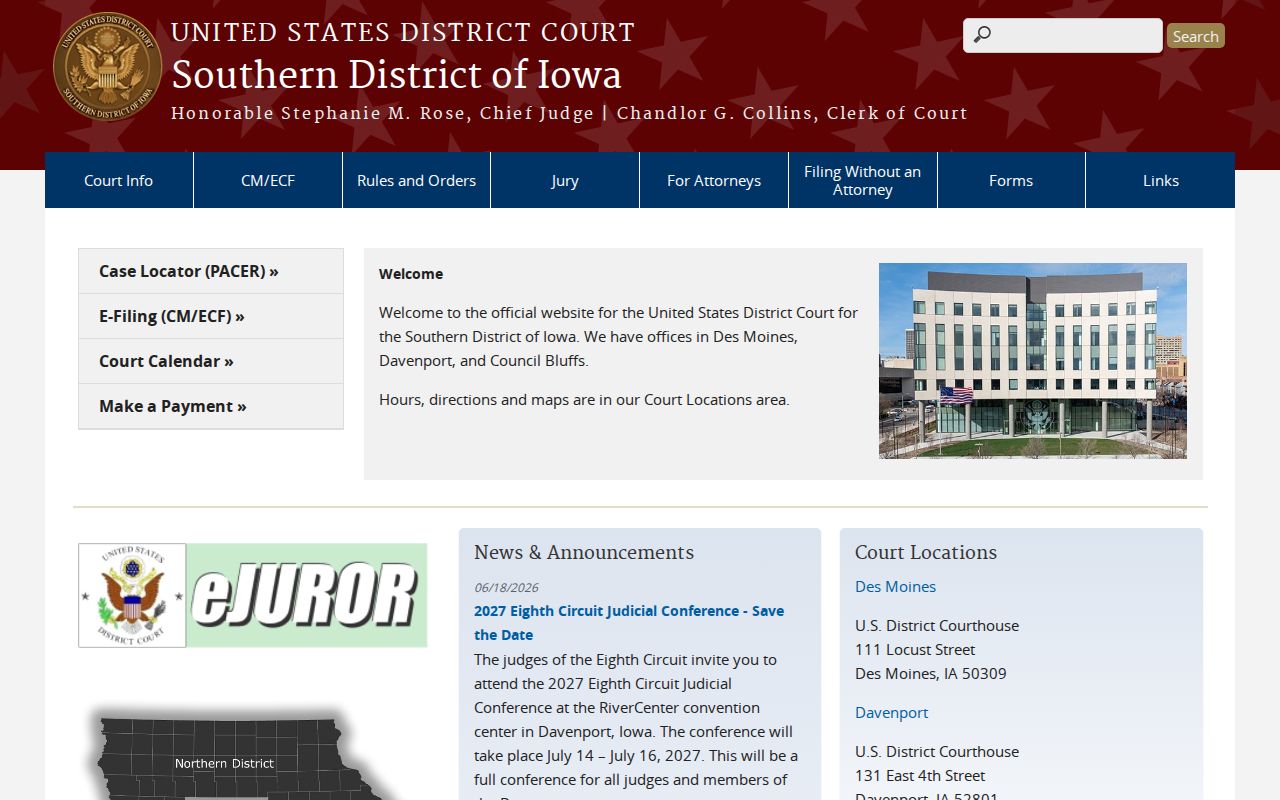
Use the federal clerk for federal files and the Dallas County clerk for Iowa District Court files.