
Criminal Cases in the Dallas County Courts
Dallas County criminal cases are heard in the Iowa District Court for Dallas County, part of Judicial District 5. Iowa does not split local prosecutions among separate felony, misdemeanor, and municipal criminal courts. District judges handle felony and other major matters. Associate district judges hear indictable misdemeanors and assigned cases, while magistrates conduct initial appearances and hear simple misdemeanors. City ordinance prosecutions also enter this unified court structure. That distinction matters in Waukee, West Des Moines, and Urbandale because a reader will not find a separate city criminal docket.
The Dallas County Clerk of District Court keeps the filed case. The public record can contain the charging document, attorney appearances, motions, hearing entries, court orders, plea, verdict or dismissal, judgment, sentence, and financial assessments. The Dallas County Attorney files and prosecutes charges, but that office is not the public case-file counter. Sheriff incident narratives and jail bookings also remain outside the clerk's file. A reader seeking the official course of a prosecution should use the court docket first, then request the needed filing from the clerk.
Dallas County Cases Online
Iowa Courts Online is the statewide public entry point for a Dallas County case. A case-number search is best because it points to one file. A name search works when the number is unknown, but Dallas should be selected as the county to reduce namesake results. The case type filter can narrow the list to criminal records. Basic public searching is free. Some document access or advanced functions may require an account or payment, and restricted material will not become public merely because an account is used.
The official Iowa Courts Online interface shows how Dallas County criminal court records are searched.
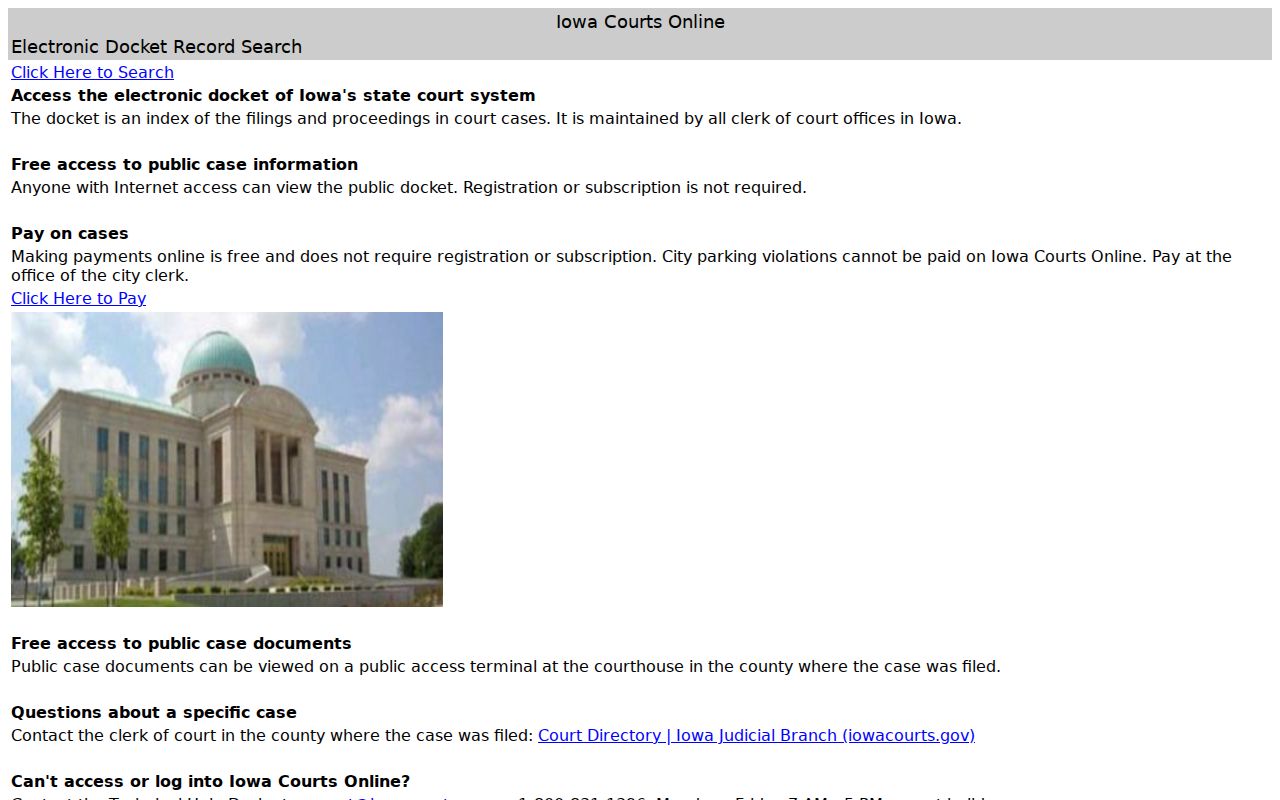
The screen is an index and access route, while the clerk's maintained file remains the official court record. Preserve the full case number when moving from the online result to a copy request.
How to Search Case Records
A focused Dallas County criminal case search begins with the strongest identifier available. Searchers should read the status and each count's disposition, not stop at the first charge description. If an online docket omits the needed image or an older entry, the full number and document date give the clerk a precise retrieval request.
- Open Iowa Courts Online and choose a case-number or name search.
- Enter the exact trial court case number when known. Otherwise, use the party's last name and first name.
- Select Dallas County and use a criminal case-type filter when the interface offers it.
- Open the matching docket. Compare filing date, attorneys, charges, event dates, status, and disposition before deciding it is the right case.
- Ask the Dallas County clerk for a plain or certified copy, naming the full case number and the exact filing or order needed.
The portal exposes the following controls for Dallas County court case records.
| Field Label | Type | Required | Notes |
|---|---|---|---|
| Case Search / Name Search | Tab or mode | One mode | Use the number route when the full identifier is known. |
| Trial Court Case Number | Text | Mode-dependent | Enter the exact Iowa number, including its letters. |
| County | Dropdown | Recommended | Select Dallas to avoid cases from other counties. |
| Last Name / Business Name | Text | Name mode | Enter the party surname. |
| First Name | Text | No | Narrows common-name results. |
| Middle Name | Text | No | Add it when available for identity resolution. |
| Case Type | Dropdown | No | Narrow to criminal categories where offered. |
| Search / Reset | Buttons | Not applicable | Submit the search or clear the form. |
Dallas County Case Type Codes
The letters in a Dallas County criminal case number describe the case category. They should be copied with the digits because the prefix helps the clerk and the public portal distinguish files. Iowa's common criminal prefixes include FE for felony, AG for aggravated misdemeanor, SR for serious misdemeanor, and SM for simple misdemeanor. The portal may display these as longer forms such as FECR, AGCR, SRCR, and SMCR.
- FECR
- A felony criminal case in Iowa District Court.
- AGCR
- An aggravated-misdemeanor criminal case.
- SRCR
- A serious-misdemeanor criminal case.
- SMCR
- A simple-misdemeanor criminal case, often handled through the magistrate or associate component.
A prefix classifies the case; it does not state the outcome. Charges can be amended or dismissed, and a case may contain more than one count. The disposition field and docket events reveal what happened to each count.
What the Case File Shows
A Dallas County case file organizes one prosecution rather than a person's full statewide history. The public view can identify the State of Iowa as plaintiff, show the defendant display name and attorney appearances, list the charge and Iowa Code section, and place each hearing or filing in time. It may also show costs, fines, surcharges, restitution, a balance, and linked appellate activity. Protected data, sealed material, and some document images remain absent from the public view.
| Case Number & Court | The full Iowa identifier, Dallas County, case type, filing date, and status. |
|---|---|
| Charging Document | The complaint, trial information, or indictment that states the filed accusation and code section. |
| Docket Entries | A dated list of filings, appearances, motions, notices, and court orders. |
| Hearing Dates | The hearing type, date, time, and location when publicly displayed. |
| Disposition & Judgment | The plea, verdict, dismissal, amended count, judgment, or other result for the case or count. |
| Sentence & Conditions | Confinement, probation, fines, costs, surcharges, restitution, and related terms entered by the court. |
Note: A filed charge is an allegation; the disposition and judgment fields show whether that charge produced a conviction or another outcome.
Dallas County Court Case Forms
The Iowa Judicial Branch form library supplies official court forms used across the state. The library can help a Dallas County reader identify the correct form for a criminal matter or an expungement request, but a blank form is not a case record. Completed filings belong in the Dallas County file only after they are accepted by the clerk and entered on the docket.
The Judicial Branch form library provides the approved statewide starting point.
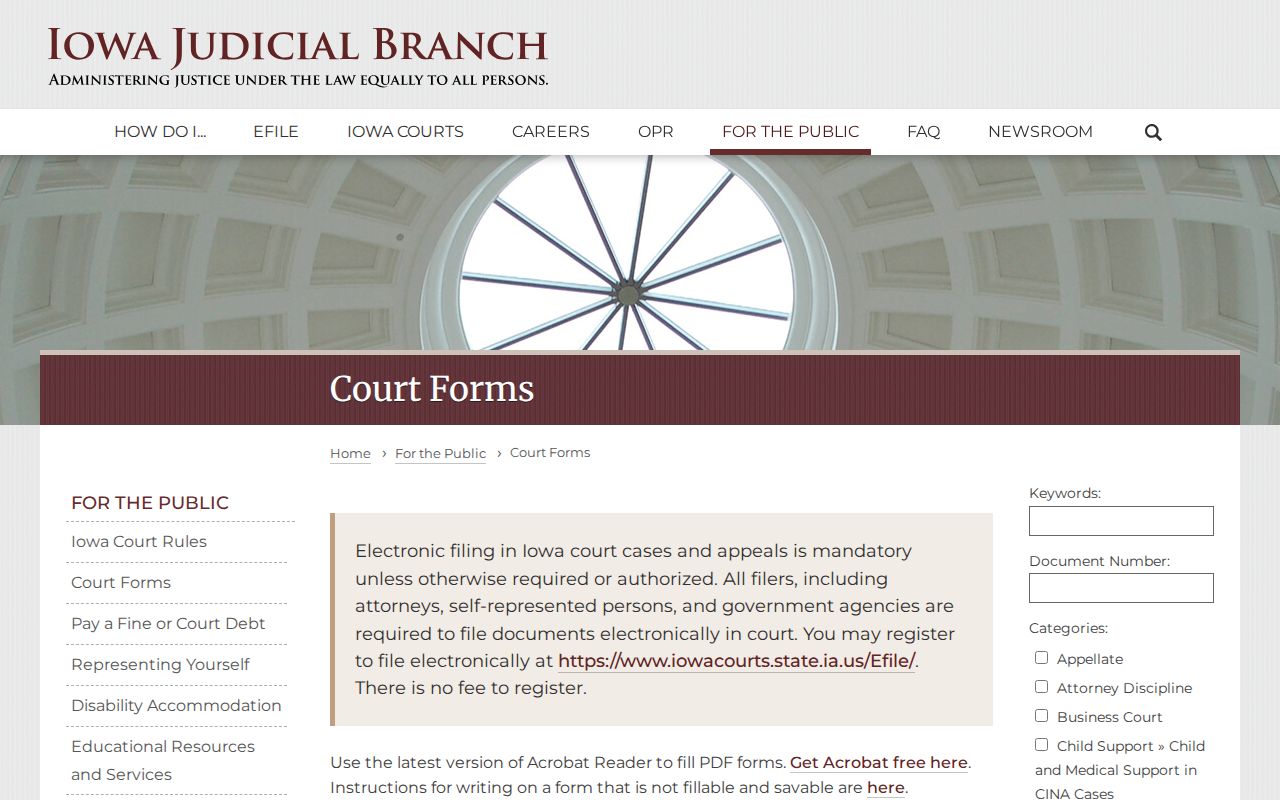
The clerk can answer filing and copy-process questions, but court staff cannot provide legal advice. When reviewing an old outcome, match the form or order to the exact Dallas County case number rather than relying on a name alone.
Stages of a Criminal Case
A Dallas County criminal case begins in the court file when a charge is filed. An initial appearance provides the first judicial review after an arrest. Arraignment is the plea stage. Pretrial entries can include counsel appearances, discovery notices, motions, scheduling orders, and amendments to the charge. The matter may end by dismissal, plea, or trial. A judgment and sentence follow a conviction, while later docket entries can reflect review, collection, supervision issues, or appeal.
Case flow: Charges Filed › Arraignment › Pretrial › Plea or Trial › Disposition › Sentencing
The sequence helps readers avoid treating one early docket event as the final result. Dates and stages vary by case, so no fixed Dallas County timetable should be inferred from the flow line.
Dallas County Court Charges Change
The charge at booking is not always the charge filed in court. An arresting agency supplies its initial allegation to the jail, then the Dallas County Attorney decides what to file. A prosecutor may change a description, add or drop a count, or decline a charge. The Iowa District Court then records the plea, rulings, disposition, and sentence. The Dallas County Sheriff keeps its own incident and booking sources. Each office records a distinct stage, so the entries need not use the same wording.
When records differ, compare the arrest date, arresting agency, booking origin, and Dallas County docket number. Use the Dallas County arrest history for the booking and agency trail, then rely on the court file for the filed charge and outcome. A DCI history is a third product built from fingerprint-supported arrest cycles and reported dispositions. It may lag when fingerprints or court results have not yet reached the state repository.
Dallas County Federal Court Cases
A federal prosecution tied to Dallas County does not become an Iowa District Court file. Dallas County lies in the U.S. District Court for the Southern District of Iowa. The authoritative online channel is the federal judiciary's PACER system, which requires registration and follows federal fee rules. A person may appear briefly in a local booking record and then have the filed prosecution continue only in federal court.
The official PACER Case Locator shows the separate federal search route.
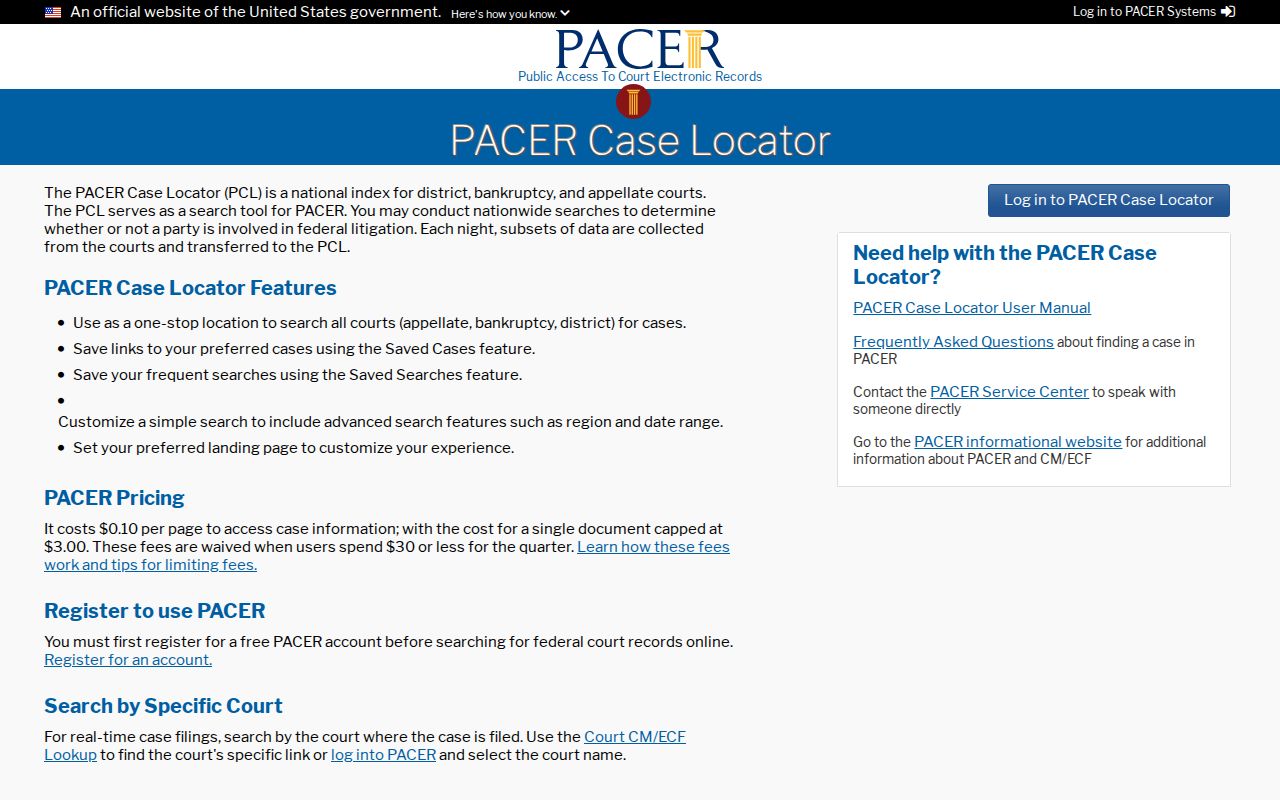
Use the federal case number and court when requesting documents. Iowa Courts Online and the Dallas County clerk cannot supply a Southern District of Iowa docket merely because the events occurred in the county.
Dallas County Case File Copies
For an older file, a document image that will not open, or a certified copy, contact the Dallas County Clerk of District Court through the official court directory. Give the full case number, document title, and filing or order date. State whether a plain copy or a certified copy is needed and ask for a cost estimate. A clerk counter or public-access terminal may provide a record that cannot be opened at home. The courthouse is at 801 Court Street in Adel, Iowa 50003.
Dallas County Clerk of District Court
801 Court Street
Adel, IA 50003
Use the Judicial Branch directory for current phone and counter hours.
The request should stay narrow. A precise document request lowers the chance of delay and helps the clerk distinguish a docket printout from a certified judgment or order.
Access & Restrictions
Iowa Code sections 22.2, 22.3, and 22.7 establish public access, request methods, costs, and confidential-record limits. Dallas County court access also reflects laws protecting juvenile files and personal data. Iowa Code section 232.147 makes juvenile court records confidential, subject to listed access rules. Sealed or expunged material, victim and minor data, birth dates, Social Security numbers, and financial identifiers may be withheld or redacted.
An empty search result does not prove that no Dallas County case exists. A spelling variation, wrong county, older nonelectronic file, restricted case, or incomplete identifier can block a match. Ask the clerk to check a precise case number or date range when the portal fails. Under Iowa Code chapter 901C, qualifying outcomes may become confidential through expungement, but eligibility depends on the charge, outcome, waiting rules, and other statutory conditions.
Access point: The online docket is a public index and working view. The Dallas County Clerk of District Court maintains the official court record and handles copy requests.